enLanguage

Sideboard

Wholesale Display Cabinet Supplier


Luoyang Demei Co., Ltd, is a metal furniture manufacturer, which integrates development, design, manufacture, quality inspection, sales, and after-sales service. Our main products are metal home and office furniture such as wardrobes, sideboards, bedside tables, TV cabinets, display cabinets, storage racks, filing cabinets, safes, office cabinets, gym lockers and school desks and chairs.


Why Choose Us?


Rich Experience

Luoyang Demei Co., Ltd was established in 1996 and has more than 20 years of experience in producing metal furniture.

Professional Advanced Equipment

We continuously upgrade our advanced production equipment, such as the laser cutting machine, CNC bending machine, laser welding machine, and environmental electrostatic powder coating spraying line.

Quality Guaranteed

We select and use high-quality raw materials, including first-grade cold-rolled steel plate, high-safety tempered glass, and environmentally friendly electrostatic powder coating. The packaging undergoes drop tests that meet 3A/6A standards and is verified by SGS.

High Production Capacity

Our company has 200 professional staff members who work in a production workshop and warehouse with a total volume of 30,000+ square meters. We have a monthly production capacity of 50,000 units, and we can produce over 200 containers per month.


First 12 Last
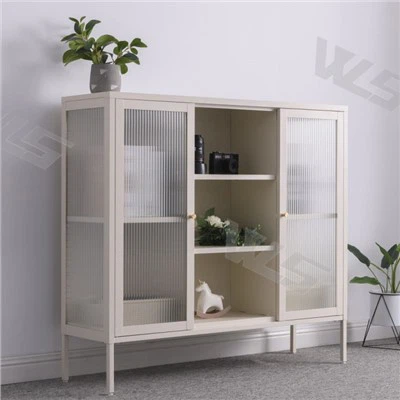
Metal Living Room Sideboard Cabinet


Brief Introduction to Sideboard

Sideboards were mainly placed against a wall in dining rooms to store cutlery, table linens, and plates. That’s how it derived its name - at the side of the room.
Over time, sideboards have evolved to cater to changing needs and interior design trends and are now used in living rooms, bedrooms, and even entryways. Modern-day sideboards feature minimalist designs and clean lines that seamlessly blend with various interior styles. They also usually have a low profile and have several storage compartments for your essentials.


What are Advantages of Sideboard?
 
Adds to the Decor

The very presence of a sideboard in your dining room adds a touch of fanciness and style to the room. Sideboards are elegant, aesthetically pleasing pieces of furniture that come in a variety of sizes, colors, styles, and materials. If you are going for a classic, rustic look, consider a farmhouse sideboard. You can even add a hutch to your sideboard for extra storage space and a vintage style.

More Storage Space

Speaking of storage space, sideboards are a great solution if you find yourself constantly needing extra storage space. If you need a lot of extra space for dishes, kitchenware, holiday decorations, and more, consider purchasing a sideboard with both drawers and cabinets that reach to the floor. These cabinets will give you the extra storage space you need in a convenient location. Plus, since a sideboard looks so natural and appealing in a dining room, you won’t have to sacrifice style for function.

Improves Organization

Are you constantly struggling to find a good way to organize the dish sets, cutlery, and other dining ware that you only ever use on special occasions but can’t part with? A sideboard in the dining room will provide you with an excellent way to organize these items. The upper drawers of these tables are often specifically designed for the purpose of storing small, sometimes delicate cutlery and decorations, while the larger cabinets provide a safe, out-of-the-way location to store dishes and more.

Creates Display Area

Not only is a sideboard itself a nice visual addition to your dining room, but it also creates a place for you to display dishes and other decorations. The surface of a sideboard is a great place to display collectible plates, family photos, trinkets that you’ve collected on trips, art, and anything else that you can think of. Some sideboards come with a hutch where you can store and display your best dishes, so that they can be utilized as decorations even when they are not being used. By creating this extra display space, a sideboard can help you put the finishing touches on the decorations in your dining room.

Durability and Versatility

Quality sideboards are prized by many for both their durability and versatility. A sideboard made out of a sturdy material like wood will last for years. And the beauty of these pieces of furniture is that if you ever get tired of having the sideboard in your dining room or decide to rearrange your furniture, a sideboard is versatile enough that it can seamlessly transition to nearly any other room in your home.


What are the main types of Sideboard?


Dining Room Sideboards

Perfect for storing cutlery, plates, pots and other cooking and dining essential. The dining and kitchen sideboard helps you to keep all your cooking utensils away and stored in a convenient place.
Allowing you to use your kitchen worktops for primarily preparation and cooking.
It’s handy during your meal too. The ideal place to put condiments like salt and pepper etc. and a place to put used plates and platters when moving on to the next course.
You can keep knives, forks spoons and other serving items in the top drawers along with gloves, towels and other essential items.
Sideboards for the dining room are ideal for everyday dining and kitchen items and can really help in unifying the style and design of your dining room furniture together.

 
Sideboard for the Living Room

The living and family room is the central hub of our homes. Everything that matters is usually stashed away somewhere here.
Wherever its magazines, remotes, books, your glasses or toys for the kids, a sideboard for the living room conveniently keeps everything tucked away.
Not only does it provide essential storage space for larger items, but it has drawers and shelves to put away all types of small everyday essentials including toys, books, manuals and more.
This way you can store the important stuff you need conveniently away, but close at hand too.
It also has substantial surface space to put ornaments, lamps, keys plants and flowers – providing a handy surface area for decorations and adding character to your living room.

 
Sideboards for the Hallway

Hallway sideboards are Incredibly handy for corralling essential things we need when going in and out, like keys, gloves, scarves, loose chain, umbrellas, letters, pet toys and more.
Some of our narrow sideboards for the hallway also have shoe storage cabinets at the bottom, enabling you to keep your hallway entrance neat and tidy.
If it’s only one piece of furniture you’re going to buy for the hallway, make it the sideboard.

 
Bedroom Sideboards

Bedroom sideboards are perfect for every type of bedroom. Wherever you have a small bedroom or a big one, you can find the ideal sideboard for your needs.

Drawers for smaller items of clothing and cupboards for larger items, bedroom sideboards can easily replace your chest of drawers.
You can also use them as dressers by adding a table mirror on it’s surface or hanging a wall mirror above it.
Available in many different sizes, bedroom sideboards have become very common and their popularity seems to be increasing.
If your’ after small sideboards for the kids rooms then there are some amazing designs that don’t break the bank too available. Made from solid hardwood like oak and walnut for strength and durability, these sideboards will last the test of time.


What Is The Purpose Of A Sideboard?
 

STORAGE

Sideboards have a wide range of drawers, shelves, and doors in various configurations. They are useful for storing glassware, serving ware, linens, games, electronics, and other household items. Some sideboards include both open and closed storage sections.


Display
The flat top of a sideboard is excellent for displaying items such as serving ware, artwork, sculpture, photographs, and vases.
Server During Meals: Sideboards in dining rooms are the perfect height for arranging and presenting food. This can free up the middle of the table for table decorations and allow for the seating of additional guests.


Entertainment Center
In living rooms, sideboards can serve as entertainment areas. They can provide a foundation for televisions and sound systems and a storage area for media equipment, DVDs, gaming consoles, and other entertainment accessories.


Home Bar
Sideboards are great pieces to store bottles, bar utensils, and glasses to create your own personal home bar area in living rooms and dining rooms. Some even have protective tops made of mirror, granite, or marble slabs that shield the sideboard’s top from inadvertent spills.


Entryway Organization
In entryways, foyers, and hallways, sideboards serve as a place to organize household accessories like dog leashes, hats, bags, keys, mail, gloves, and scarves. This keeps these vital items concealed but easily accessible.


Room Divider
Sideboards can serve as room dividers in open-concept living areas, drawing boundaries between various functional zones with open spaces without completely enclosing them.


Workspace
With a fold-out work surface or an integrated desk, some contemporary sideboards are made to double as workspaces. This facilitates the concealment and arrangement of work areas in open-concept living areas.


Bedroom Storage
Sideboards in bedrooms can be used to set up a television, create an attractive display, or store extra items such as linens or clothes.


Applications of Sideboard
 
In the Bathroom

Maybe sound unfamiliar, but sideboards can be used in bathrooms, too. Mainly for functional reasons, they are used as storing towels, napkins, or other bathroom objects. Furthermore, they can be used as a piece of furniture that added a sink.

In the Dining Room

Traditionally in dining rooms, using a sideboard is both functional and decorative in kitchen areas. In specific, sideboards can be preferred for displaying as well as storing the dishes. Also, they can be used for displaying a family picture and small accessories. In this way, while eating in the dining room, you can have a luxurious atmosphere, also a place to store plates.

In the Study Room

A study in one of the most-used rooms in the houses. Especially, increasing trend on home-office style leads people to have a study room to efficiently work. Yet, there are some houses that do not have enough space to add a study desk. For this reason, a sideboard can be the solution with its practical use as they can have smaller sizes in comparison.

In the Bedroom

White sideboard with wooden details in the bedroomA bedroom is a place where you can put your personal objects. Therefore, you can use a sideboard for hiding your special items in the drawers. Actually, some models of sideboards can be substituted for mini dressers.Moreover, a sideboard can be used as a makeup table by adding a mirror on the wall. Since a sideboard has relatively smaller dimensions than a makeup table, it is also good for insufficient areas. In other words, if your living space is not big enough, you can choose a sideboard as a make-up table.

In the Hallway

Specifically, sideboards are mainly used in hallway areas for both functional and decorative reasons. Actually, they are very functional for putting items such as bags, keys, or wallets before going out and after coming from the outside. Thus, they offer practical use.In fact, what is important here is that a sideboard is among the furniture welcoming the guests first. Therefore, in addition to its practical use, it should be decorated in a stylish way since the hallway is the first thing that guests can get an opinion about the whole house decoration.

In the Living Room

Green sofas at the living room with a sideboard at backThe living room is surely essential to any house since they are not only for yourself but also for the guest that you invite into your house. That’s why, while using a sideboard in the living room, you should carefully decorate it. Indeed, you should not put your personal items in the drawers of the sideboard.However, a sideboard can be used in many ways in the living room. Firstly, they are perfect for storing as well as displaying books. Especially, well-organized books there can affect the whole ambiance of the living room by adding sophistication.Another way to use a sideboard in the living room is as a TV stand. Actually, a TV stand can be the focal point of the room. Thus, while decorating it, you need to be careful act since it attracts all the attention. For example, adding accessories that are compatible with each other can have a considerable effect, and enhance the decoration style.


What are the materials of Sideboard?


Marble/Granite

If you’re willing to spend a little extra, marble and granite are always showstoppers. When cleaning, use light products to ensure that your marble doesn’t get damaged.

Metal

Sideboards and buffet tables made of metal can add texture and an industrial feel to your space. To keep the metal looking its best, dust routinely and use a mixture of mild soap and water to clean any marks.

Wood

Wood sideboards are typically the most popular, as they are perfect for bringing a natural element into any room. With options ranging from rustic weathered wood to sleek white wood, a wood table will fit any style.

Plastic/Acrylic

Plastic and acrylic sideboards are clean-lined and modern. These will add a sleek yet simple touch to any room. Acrylic is particularly sensitive to scratches, so make sure to use a microfiber cloth when cleaning, as paper towels can actually scratch the surface more.


How to maintain Sideboard?


  • Regular cleaning is key. You’ll need a couple of clean, lint free cloths – one damp, to wipe down, and one to dry.
  • Wipe up any spills immediately.
  • Use a diluted, wood-friendly detergent on any stubborn marks.
  • Don’t use harsh or abrasive chemicals, polishes or sprays.
  • To repair small scratches on veneer, you can use a small amount of oil polish, and for solid wood, you can just seal with matching varnish or paint. Always test a discreet area first.
  • Try to keep your storage out of direct sunlight – the light and warmth can cause colour fading and movement of the timber.
  • Don’t place your storage directly in front of a radiator – on veneered pieces, heat can cause the veneer to lift away, and cause solid wood to move.
Narrow Metal Sideboard


The Considerations for Buying
 
 
Space

Assess the available space in your room to determine the appropriate size and length of the furniture piece. Take accurate measurements to ensure that the piece you choose fits proportionally within the given area. Also, consider factors such as wall placement, proximity to other furniture, and traffic flow within the room.
As sideboards are typically narrower in width and have a lower height, they are well-suited for smaller spaces to maintain a more streamlined appearance without overwhelming the area.

 
Function

A sideboard with a picture frame and a speaker on top and wine glasses hanging above it.
While traditionally associated with dining rooms, sideboards, buffets, and credenzas can serve various purposes in different areas of the home. Sideboards can function well in entryways or living rooms, or even serve as your very own coffee bar.
So, depending on how you plan to use it, what you plan to store, and how accessible you want those items to be, this can affect which piece you choose to accommodate your needs.

 
Storage needs

When it comes to storage, sideboards, buffets, and credenzas may offer slightly different capacities and features.
As sideboards are usually smaller when compared to buffets and credenzas, they have less storage space. Most sideboard designs also feature closed storage, so if you prefer to display decorative items, a sideboard may not be for you.

 
Aesthetic appeal

Don’t just focus on the functionality of each furniture, but also the aesthetics! Take into account your interior design style and where you plan to place the piece. For instance, a sideboard with clean lines and tapered legs like the Sideboard can add a touch of elegance and sophistication to a room.


Our Factory


Our company integrates design, production, sales, and after-sales services to provide you with the best price.

20220616152950af8ede4fde074f21a80e30654b4fc7b1.png (226×147)
202206161529259a3fcb1aabcb4bebb1b0e15119c7fb21.png (226×147)
202206161529365c2a685153e7470a9416be8b090abebb.png (226×147)


Certificate


Our products meet the 3A/6A standards and are verified by SGS.


20220616163157a24245fb994d436a87d1b2b373f6634a.png (1152×449)


Contact Us
Email
wls@demeifurnituregroup.com
Address
GROUP 6, DONGPANG VILLAGE, PANGCUN TOWN, YIBIN DISTRICT, LUOYANG, HENAN
Phone
Jack zhang +86 15138771398


Frequently Asked Questions


Q: What to look for in a sideboard?

A: Size and proportion
When selecting a sideboard for your space, considering the appropriate size is crucial to ensure it fits harmoniously and serves its intended purpose effectively. Also, ensure the sideboard doesn't overpower the surrounding furniture or obstruct traffic flow.
A sideboard that is too large in comparison to other furniture pieces may create a sense of imbalance, while one that is too small may appear insignificant or get lost in the room. Aim for a size that complements the existing elements and maintains a sense of visual harmony.
Additionally, the size of the sideboard will affect the amount of storage space you have.
 
Storage needs
Evaluate your storage requirements and prioritise the configuration that suits your needs. Do you need space for larger items like serving platters, books, or electronic devices? Will you be storing smaller items that require drawers or compartments to keep them organised?
Depending on what you need to store, this affects the size and design of the sideboard. You can also opt for a sideboard with adjustable shelves or removable inserts for extra flexibility for future needs.
 
Style
Choose a sideboard that aligns with your existing style to maintain visual harmony.
For example, if you have a modern interior, opt for a sleek, minimalist sideboard with clean lines. If your space leans more towards a rustic or farmhouse style, consider a sideboard made with light-coloured wood.
Pay attention to the hardware and details on the sideboard, such as the finishes, handles, and leg styles. If you’re going for a unique and bold style, look for details such as carved motifs, inlays, or other distinctive features and textures that can enhance the overall aesthetic.

Q: Do you need a sideboard?

A: A sideboard is a versatile furniture piece that adds functionality and aesthetic value to your home. With its storage capabilities, display potential, and serving functionality, it serves as a practical and stylish addition to your home.
By carefully selecting the right sideboard that suits your needs and complements your interior style, you can unlock the true potential of this timeless piece of furniture.

Q: What is the difference between a sideboard and a buffet?

A: While distinctions between the two exist, there aren’t any major differences as buffets are similar to sideboards in terms of design and function. The terms “sideboard” and “buffet” are often used interchangeably in modern usage. The choice between the two ultimately depends on personal preference, intended use, and the specific design and functionality that best suits your needs.

Q: What room does a sideboard go in?

A: While sideboards were primarily used in dining rooms back in the day, changes in interior design trends and needs have resulted in sideboards being used anywhere! They can be used in bedrooms, living rooms, entryways, and even outdoors.

Q: What types of sideboards are there?

A: Sideboard/Credenza: These designs feature cabinets that reach almost all the way to the ground with short legs to maximize storage. Sideboards and credenzas frequently have sliding doors.
Buffet Table: Buffet tables and sideboards are very similar in design, but traditional buffet tables have higher legs.
Server: Servers are much smaller widthwise than both sideboards and buffet tables. They are also considered more formal than the other designs, and their small size makes them perfect for compact rooms.

Q: What factors should you consider before buying a sideboard?

A: Step 1: Measure Other Furniture
Consider what other furniture is currently in the room. You don’t want the proportions of your sideboard to be disproportionate to everything else. Sideboards and buffet tables should be at least the same height as the dining table, but ideally they are a few inches taller. The most common height for sideboards or buffet tables is 30" – 36" tall. Don’t be afraid to make the width different from that of your dining table. (There are no rules here!)
Step 2: Measure the Space
Measure the width, height, and depth of the space where it will be placed. Check that it won't bump into any items. If there’s a window where you’ll be placing the table, make sure there is a reasonable amount of space between the bottom of the window and the top of the sideboard. Also, make certain that your sideboard won't be covering a heating or cooling vent (this is more common in older homes).
Step 3: Ensure a Seamless Layout
Make sure that there is ample room to walk around the sideboard easily, even if the cabinets and drawers are open. We recommend having at least 36" of room between the edge of any furniture and the front of the sideboard. In rooms that are smaller, have at least 18" – 24" of clear space.
Step 4: Measure Doorways & Hallways
Measure any doorways and hallways leading to where you will place the buffet table. When choosing a table, ensure that the dimensions are small enough to fit through these spaces.

Q: What can sideboards be used for?

A: Sideboards are versatile pieces of furniture that have many uses. In dining rooms, where sideboards are traditionally found, they are often used to store extra tableware, glassware and cutlery, and many people use them to hold their ‘special occasion’ dinnerware.
A sideboard can also be used as a bar to store your liquor and glassware and serve drinks in a dining room, lounge or kitchen.
Sideboards can also be decorative, as the top can be used to display lamps, plants, photos and other ornaments, making them a good addition to almost any room of the house that needs some extra storage. Sideboards are often now used in the hallways and entryways of homes.

Q: What are the types of sideboards?

A: Sideboards are commonly made from solid wood and we think mahogany is a great choice for adding a classic and sophisticated look to your living or dining room. Sideboards come in many styles to suit a range of decors, such as Georgian, Regency, Chippendale and Campaign reproductions. 
Sideboards come in a range of different dimensions, but most sideboards are quite shallow to better fit into rooms without cutting off too much space. Many sideboards have very short legs or no legs at all to maximise storage but it is possible to find designs that feature longer legs. Most sideboards will also have a mixture of drawers and shelved cabinets.

Q: What’s the difference between a credenza and a sideboard?

A: A credenza is a piece of storage furniture built with no (or short) legs. As a result, a credenza gives off a low-to-the-ground appearance, often fitting in with the mid-century style of design. A sideboard is also a piece of storage furniture; where the two differ comes down to looks. While credenzas encompass a low, simplistic shape, often with cabinet-style sliding doors, sideboards tend to be bigger, equipped with high legs and dresser-like drawers.

Q: Can I use a sideboard as a TV stand?

A: A sideboard can be used as a TV stand – so much so, in fact, that there is a whole subcategory of credenzas known as ‘TV credenzas.’
Where a traditional TV stand and a traditional credenza differ, however, has to do with aesthetic and storage capabilities. A sideboard is lower, sleeker, and contains more inner compartments than a TV stand.

Q: What’s the Difference Between a Credenza, Sideboard, and Buffet?

A: Credenza A credenza is an American term for a dining room cupboard used to serve buffet meals. It may also be used to store or display decorative serving dishes. Credenzas are sometimes smaller and more formal-looking than a sideboard or buffet. They often have no legs or else very short ones. They may have shelving in their centers surrounded by glass display cabinets on either side. They are often made of decorative wood with a heat-resistant top for setting down hot plates.
In Renaissance Italy, credenzas were holding areas where taste-testers could examine a royal person’s food for poison. Back in those days, they were often decorated with columns and other ornate woodwork. These days, people use credenzas as handy tables for serving meals within their homes. Long and low, they offer plenty of surface area for laying out a buffet of food. Attractive and useful, a credenza can be a great way to display and serve food at your next party that allows guests to help themselves with ease.
 
SideboardLike a credenza, a sideboard may also have cabinets or drawers used for storing serving ware, and they are often placed in living rooms or hallways in addition to dining rooms. They are different from credenzas in that they often have floor-length cabinets and may have box-like hutches used for displaying decorative items. They may also alternately be called a “server.”
Sideboards emerged in England in the 18th and 19th centuries as a dining room accessory popular in affluent homes. They were often decorative pieces that had expensive wood veneer and were often used to store more general items than serving ware alone.
Sideboards are still popular today and their styles can range from traditional to sleek and modern. They’re a wonderful option if you’re looking for a piece that can be used in buffet-style meal service, but which also has the versatility to fit within areas of the home other than the dining room. One of the best places for a sideboard is your home office. Sideboards are ideal for storing important files or references that you may need regularly but wish to keep out of sight, and they can also be an excellent home for a printer or other essential office equipment that you don’t want cluttering up your desk while you work.
 
Buffet Some people use the words buffet and sideboard interchangeably. However, unlike sideboards or credenzas, buffet tables often sit on longer legs and are always placed in dining rooms. Buffets originated in Sweden where they were used to serve large smorgasbords. They became popular in France and soon were being used all over Europe.
A buffet is another good choice for laying out self-serve food in a manner that’s easily accessible for guests and family. Whether classic, modern or country-style, a buffet can store table linens and serving wear year-round and help make your next party a success.

Q: What is the use of sideboard?

A: For storage needs
One of the primary functions of a sideboard is to provide additional storage space. The combination of drawers, shelves, and cabinets allows you to organise and store a wide range of items.
In dining rooms, sideboards can hold tableware, serving dishes, and glassware. In living rooms, they can house books, media equipment, and display cherished decor pieces. They are also practical additions to bedrooms, offering storage for bedding, clothing, or bulky winter wear.
 
To serve food
If you’re planning to use sideboards for their original purpose, they serve as great functional extensions of the dining table during social gatherings (especially if you have a small dining table!).
They can be used to lay out a buffet-style meal, as a dessert station, or just to place extra dining ware. The spacious flat surface offers a convenient area for food, drinks, or even a stylish coffee bar setup, which takes your hosting game to the next level.
 
As a vanity table
With the addition of a mirror and a stool or armchair, a sideboard can be transformed into a stylish vanity or dressing table.
The drawers can hold makeup, jewelry, and hair accessories, while the surface becomes a dedicated space for getting ready each day. This allows you to create a functional and elegant grooming area within your bedroom.
 
For decoration
Sideboards are great for pieces to showcase your personality and style - both as a decoration itself and as a platform for decorative items.
The top surface can be adorned with items like vases, photo frames, or candles. Open shelves can display books and collectibles, adding visual interest to the room.
 
To divide rooms
If you have an open-concept layout in your home, sideboards can be used strategically to divide the space into separate functional areas.
For example, placing a sideboard between the dining and living area can create a visual distinction and helps to define each space. Not only does this add structure to the open layout but also provides additional storage and display opportunities.

Q: How to choose sideboard?

A: Measure Your Space
Determine the available space where you want to place a sideboard. Measure the length, width, and height of the space to determine what size sideboard will work. Allow at least 24 inches of clearance around any potential sideboard for easy walkways.
 
Determine the Function of the Sideboard
Identify the primary purpose of the sideboard to decide the best size and style options for the piece. If you want a sideboard for serving food, choose one with a height of around 36 inches or one similar to your countertops. This makes it easier to place and serve food. It is also helpful if serving sideboards feature protective tops to preserve them from food, moisture, and heat damage.
 
For storage sideboards, look for sideboard options with ample storage and optimal drawer, shelf, and cabinet configurations. Display sideboards need to have side, flat tops.
 
Style and Aesthetics
Match or complement the existing style of the room’s furniture with a similar style sideboard. Whether your space is contemporary, rustic, farmhouse, mid-century, or traditional, there is a sideboard style to suit your taste. When selecting a sideboard to go with your decor, take the style, color, and materials into consideration.
 
Assess Your Storage Needs
First, determine the items that you want to store to decide which sideboard will work best for your needs if you want a piece for its storage potential. Choose appropriate storage configurations for large and small items that you want to store. Some sideboards have open storage compartments in the middle, which work well for attractive items like heirloom pieces that you want to display. Other sideboards have all closed storage, which works best for unsightly but necessary items.
 
Materials and Finish
Consider the materials used in the construction of a particular sideboard, as well as how it will wear and complement your lifestyle. Wood, MDF, metal, and glass are common materials, and each wears and damages differently. Sideboards with glass or marble features are prone to cracking and may not be appropriate in certain locations or for busy, active families. Certain high-gloss stained pieces will show more marks and scuffs and will be more difficult to repair than painted or rustic finished pieces.
 
Size and Scale
Check that the size and scale of the sideboard are proportional to the dimensions of the room and their other furniture. A typical sideboard width is 60 inches, but there are larger and smaller options if this size is not suitable.
 
A sideboard’s average height is 34-36 inches, making it ideal for serving food. When selecting a sideboard to mount a television on, keep in mind that many standard sideboards are too tall for comfortable TV viewing. For optimal viewing, experts recommend that the middle of the TV be mounted 41 inches above the floor.
 
Sideboards vary in depth but are typically 20-22 inches deep. Ensure that wherever you place your sideboard, there is 24 inches of clearance between this piece and other furniture. Ensure a clearance of 36 inches for particularly busy walkways.
 
Multi-Functional Features
Some sideboards feature additional features that are helpful to expand your ability to utilize them. They may include features such as pull-out serving trays, built-in wine racks, and integrated desk compartments.
 
Quality and Durability
Invest in a well-made piece that will last and maintain its character. Consider the material used in the construction as well as the quality of the hardware, craftsmanship, and design.
 
Budget
Decide on your budget before you go shopping for a sideboard. This will help you narrow down your options and select a piece that fits within your budget. You can save money by purchasing your sideboard during a sale or by looking for off-brand options. Synthetic wood sideboards are often less expensive than solid wood sideboards, but they are not as durable and will not last as long.
 
Personal Preferences
Trust your personal preferences when it comes to choosing a sideboard that resonates with your style. Selecting a style based on your liking will probably make you happier in the long run than selecting a style based on what you believe is appropriate.

Q: What are the styles and colors of sideboards?

A: All traditional sideboards were made out of a hardwood. With its enduring popularity and the vast amount of it’s trees available, Oak was the perfect wood for UK and European furniture manufacture.
Sturdy and opulent oak furniture graced the Tudor eras with oak sideboards becoming increasingly common.
After the oak period came the walnut era. As manufacturing technology improved, especially in the furniture industry, craftsman now had sawing machines which could cut down and shape walnut.
You could now get walnut veneer inlaid upon the oak, eventually leading to solid walnut sideboards.
The next step in hardwood sideboard manufacturing was the introducing of mahogany. Initially the French and Spanish were the first to use this material. It soon became widely used in the UK too.
Lacquer and varnishing were added with time, but it took a while before manufacturers started using other materials like MDF, chipwood and others to build sideboards from.
Today all the styles, whether it is traditional hardwood sideboards or more contemporary modern sideboards like high gloss, are available and still as popular.

Q: How do sideboards optimize space and provide storage solutions?

A: Sideboards offer ample storage space with their shelves, doors, and drawers. They help keep items organized in various rooms such as the dining room, living room, kitchen, bedroom, and hallway. In addition to their storage capabilities, sideboards can also serve as decorative pieces, allowing you to display prized possessions, centrepieces, or family photos on top of them. They optimize space by providing dedicated storage for specific items, reducing clutter, and adding a touch of style to the room.

We're well-known as one of the leading sideboard manufacturers and suppliers in China. Please rest assured to wholesale high quality sideboard at competitive price from our factory. For customized service, contact us now.

TV Stands with Drawers, Slim Metal Shoe Cabinet, Glass Sideboard Cabinet

(0/10)

clearall